Blog
Are scratch-offs rigged? What the official prize data shows
A ticket's result comes from the game's fixed prize table, not from anything at the counter: the Texas Lottery publishes how many prizes were printed at each level and how many have been claimed. The Texas Lottery also discloses that a game can stay on sale after its top prizes are claimed.
Are scratch-offs rigged? It is a fair question, and the official sources point to a fixed prize table: a ticket's result is set by the game, not at the counter. The Texas Lottery's current games list gives, for each game, the number of prizes printed at each level and how many have been claimed, and the lotteries describe the checks they put around their games.
What can feel unfair is real, and the Texas Lottery discloses it itself: games can stay on sale after their top prizes are claimed. This guide shows who checks the games, what the official counts show, and how to check a game yourself.
Are scratch-offs rigged? The short answer: the prizes are fixed at the printer
A scratch-off game is a print run with a fixed prize table. The Texas Lottery's current games list shows, level by level, how many prizes were printed in each game, next to how many have been claimed, and the claimed number is the only one that moves.
Scratching a ticket reveals its result; it does not decide it. A prize level has a set number of tickets printed, and only claims change the count over time. Nothing a clerk or a player does at the counter adds a prize to a level.
The New Jersey Lottery's FAQ tells a player who asks why winners seem clustered in some places that "odds don't care about geography". That answer is about where winners live rather than about scratch-off print runs, but its point is plain: a ticket's chances do not depend on the town where it is sold.
So if you are asking whether scratch-offs are rigged because a store near you never seems to sell a big winner, the answer is in the prize table, not the store. In many games the list shows only a handful of top prizes printed, and our guide to what percent of scratch-offs are winners shows that most winning tickets are small.
Our guide to how scratch-off odds work explains the rest of the arithmetic: the overall odds count every winning ticket in the print run, and they describe the whole game, never the ticket in your hand.
Who checks the games
Each lottery describes its own safeguards, and they differ by state. In Texas, the Security Spotlight says the Texas Lottery "exercises strict control and supervision over its games to promote and ensure integrity, security, honesty and fairness in the operation and administration of the lottery." The same page says how the agency responds to complaints:
- The Texas Lottery says it reviews every complaint, and that when a complaint is found to be a violation of lottery laws and rules, disciplinary action is taken against the retailer.
- Administrative penalties range from warning letters to license suspension or revocation, and in some cases criminal prosecution is pursued.
- The page lists retailer violations that players can report, among them a store that validates a winning ticket and then fails to pay it, a store offering to buy a winning ticket, and a store selling a ticket from a game after its end date.
In Florida, the Florida Lottery's integrity page says the lottery is "accountable to the Legislature and the people of Florida through a system of audits and reports" and that it "takes special measures to ensure randomness in all of our game offerings". It also says "Since all Lottery games are random, there is no specific pattern for winning Scratch-Off or Draw tickets." Its security FAQ says the Division of Security investigates complaints about retailers and that an internal database tracks multiple winners and looks for irregularities.
In New Jersey, the lottery's FAQ says the New Jersey Lottery must by law be a game of chance, and that its drawings are conducted under the auspices of an independent auditing firm. It also says tickets that were not sold, prizes included, are destroyed after the conclusion of the auditing process.
None of these pages explains in full how a scratch-off print run is made. What they show is a mix of audits, a security division and a complaint process, aimed mostly at the parts of a sale that can go wrong at a store.
The Texas Lottery itself is now run by the Texas Department of Licensing and Regulation (TDLR). The Texas Secretary of State's rule transfer notice says Senate Bill 3070, passed in the 89th Legislative Session, provided for abolishing the Texas Lottery Commission and transferring the administration of the state lottery to TDLR, with the lottery's rules moving to TDLR's chapters of the Texas Administrative Code. The Security Spotlight page carries a TDLR copyright line.
What the official counts show
The official counts are public, and anyone can check them. The table below shows, for each state we cover, how many games are on sale and how many still have a top prize left or have none.
| State | Games on sale | With a top prize left | No top prize left | Count not confirmed |
|---|---|---|---|---|
| California | 58 | 56 | 0 | 2 |
| Connecticut | 56 | 55 | 0 | 1 |
| Florida | 76 | 62 | 12 | 2 |
| Georgia | 131 | 104 | 26 | 1 |
| Louisiana | 44 | 44 | 0 | 0 |
| Massachusetts | 103 | 94 | 9 | 0 |
| Michigan | 113 | 101 | 4 | 8 |
| Minnesota | 40 | 39 | 0 | 1 |
| Missouri | 49 | 46 | 2 | 1 |
| North Carolina | 57 | 57 | 0 | 0 |
| New Jersey | 66 | 61 | 3 | 2 |
| New York | 65 | 63 | 0 | 2 |
| Oklahoma | 54 | 46 | 8 | 0 |
| South Carolina | 37 | 37 | 0 | 0 |
| Texas | 73 | 73 | 0 | 0 |
| Virginia | 66 | 65 | 0 | 1 |
| Washington | 40 | 38 | 2 | 0 |
Read the last two columns together. A game moves from the first to the second when its last top prize is claimed, and in Texas that is the moment the lottery says closing begins, as the next section explains.
Top prizes do get claimed: the Texas Lottery's list is headed "Prizes Claimed" with the date of the count. Its figures change as claims come in, and the table above carries the live numbers.
The cards below show the other side: games still on sale with no top prize left on the latest official counts.
No California game on sale is known to have run out of top prizes.
No Connecticut game on sale is known to have run out of top prizes.
12 Florida games on sale have no top prizes left.
-
 $30 $15MM DIAMOND SPECTACULAR#1608Top prize $15,000,000 No top prizes left
-
 $20 GOLD RUSH LEGACY#1562Top prize $10,000,000 No top prizes left
-
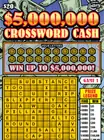 $20 $5M CROSSWORD CASH#1539Top prize $5,000,000 No top prizes left
26 Georgia games on sale have no top prizes left.
-
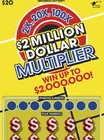 $20 $2 MILLION DOLLAR MULTIPLIER#1715Top prize $2,000,000 No top prizes left
-
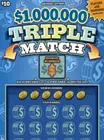 $10 $1,000,000 TRIPLE MATCH#1855Top prize $1,000,000 No top prizes left
-
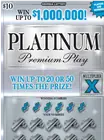 $10 PLATINUM Premium Play#1871Top prize $1,000,000 No top prizes left
Every Louisiana game on sale still has a top prize left.
9 Massachusetts games on sale have no top prizes left.
-
 $50 BILLION DOLLAR EXTRAVAGANZA#387Top prize $25,000,000, paid yearly No top prizes left
-
 $30 MILLIONS#373Top prize $15,000,000, paid yearly No top prizes left
-
 $20 $10,000,000 BONANZA#452Top prize $10,000,000, paid yearly No top prizes left
4 Michigan games on sale have no top prizes left.
-
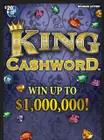 $20 King Cashword#715Top prize $1,000,000 No top prizes left
-
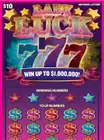 $10 Lady Luck 777#711Top prize $1,000,000 No top prizes left
-
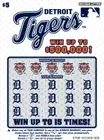 $5 Detroit Tigers#708Top prize $500,000 No top prizes left
No Minnesota game on sale is known to have run out of top prizes.
2 Missouri games on sale have no top prizes left.
- BIG CASH RICHES#490Top prize $100,000 No top prizes left
- MONEY MONEY MONEY#527Top prize $100,000 No top prizes left
Every North Carolina game on sale still has a top prize left.
3 New Jersey games on sale have no top prizes left.
-
 $5 20X#1958Top prize $200,000 No top prizes left
-
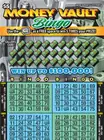 $5 Money Vault Bingo#1977Top prize $100,000 No top prizes left
-
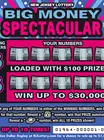 $2 Big Money Spectacular#1964Top prize $30,000 No top prizes left
No New York game on sale is known to have run out of top prizes.
8 Oklahoma games on sale have no top prizes left.
-
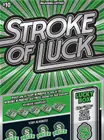 $10 Stroke of Luck#795Top prize $125,000 No top prizes left
-
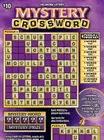 $10 Mystery Crossword#806Top prize $100,000 No top prizes left
-
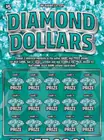 $5 Diamond Dollars#825Top prize $55,000 No top prizes left
Every South Carolina game on sale still has a top prize left.
Every Texas game on sale still has a top prize left.
No Virginia game on sale is known to have run out of top prizes.
2 Washington games on sale have no top prizes left.
-
 $10 RED HOT MONEY#1997Top prize $250,000 No top prizes left
-
 $10 MONEYBAG MULTIPLIER#1964Top prize $200,000 No top prizes left
Games like these are one reason people ask whether scratch-offs are rigged. A ticket from a game with no top prize left can still win one of its smaller prizes, but it can no longer win the prize printed in big type on the front.
Why games with no top prize left are still sold
The Texas Lottery says plainly that this happens. The Texas Lottery's current games list carries this notice: "game closing procedures will be initiated when all top prizes have been claimed. During closing, games may be sold even after all top prizes have been claimed."
The same Texas closing notice says a game can also be closed for documented business reasons, and that such a game may still have prizes, top prizes included, that no one has claimed. The New Jersey Lottery's FAQ says the end dates of its scratch-offs "are dependent upon sales and demand."
The Texas notice does not say why a game keeps selling during closing, but it makes the timing plain: closing is a period, not a single moment.
That is a disclosed practice, not a hidden one, and a good reason to check a game before you buy. Our guide to what top prizes remaining means explains why the count can still show a top prize after its ticket has sold, and Florida scratch-offs ending soon lists the Florida games nearest their last day of sales.
When a prize is never claimed, the money does not stay with a store or a printer. The Florida Lottery's winning FAQ says Florida law sends most of the prize money left on expired tickets to the state's Educational Enhancement Trust Fund and puts the rest back into the prize pool or special prize promotions, and the New Jersey Lottery's FAQ says that, of the prize money nobody claims after a scratch-off game ends, it has given nearly all to support education and institutions.
How to check a game yourself
You do not have to take anyone's word for it, ours included. A few checks take minutes:
- Look up the game's prize table. The Texas list publishes the prizes printed and claimed for each Texas game, and every Texas scratch-off, A to Z, is listed on LuckyAlgo with its prizes left.
- Check the top prizes left and the day the count was taken, and remember the count lists claims as of that day.
- Check how long the game has been on sale. The Texas list gives each game's start date, and an old game with top prizes still on the count proves nothing by itself: those prizes may sit in tickets that are sold but not yet claimed, or in tickets still unsold.
- Check whether the game is closing. The Texas list marks games that will be closing soon with an asterisk, and a game near its last day of sales, or one with no top prize left, is worth a second look before you pay.
- Check your own ticket before you hand it over, with a self-service checker or the lottery's app, and ask for the player copy of the validation receipt when a store cashes a winner, as the Texas Security Spotlight suggests.
- Report anything that looks off, from a store that fails to pay a validated winner to one that sells a game after its end date: the violations listed above are the Texas Lottery's own, and it says it reviews every complaint.
Those last two checks are where your own care counts most. The Texas Lottery's security page mostly describes problems at the counter, the part of a sale a player can watch, and it advises players to always check their tickets at the time of purchase.
LuckyAlgo shows the official counts for each state we cover with the day they were checked, how LuckyAlgo scores scratch-offs publishes the formulas we use, and our editorial policy sets out how we source, date and correct what we publish. If worry about the games is turning into chasing losses, our responsible play page lists free, confidential help.
Play responsibly. 18+ (21+ in some states). A scratch-off is a paid game of chance: set a budget you can afford to lose. Free, confidential help: 1-800-MY-RESET (1-800-697-3738, also the Georgia, Oklahoma and Texas lines) by call or text, California 1-800-GAMBLER (1-800-426-2537), Connecticut 1-888-789-7777, Florida 1-833-752-9947, Louisiana 1-877-770-7867, Massachusetts 1-800-327-5050, Michigan 1-800-GAMBLER (1-800-426-2537), Minnesota 1-800-333-HOPE (1-800-333-4673), Missouri 1-888-BETSOFF (1-888-238-7633), North Carolina 1-877-718-5543, New Jersey 1-800-GAMBLER (1-800-426-2537), New York 1-877-8-HOPENY (1-877-846-7369), South Carolina 1-877-452-5155, Virginia 1-888-532-3500, Washington 1-800-547-6133. More on responsible play.
Sources
- Texas Secretary of State: Texas Lottery Commission rule transfer to TDLR (checked Oct 18, 2026)
- Texas Lottery current games list and its game closing notice (checked Oct 18, 2026)
- Texas Lottery Security Spotlight: protecting your tickets (checked Oct 18, 2026)
- Florida Lottery integrity page (checked Oct 18, 2026)
- Florida Lottery security FAQ (checked Oct 18, 2026)
- Florida Lottery winning FAQ (checked Oct 18, 2026)
- New Jersey Lottery frequently asked questions (checked Oct 18, 2026)
Questions and answers
Are scratch-offs rigged?
The Texas Lottery's games list gives a fixed prize table, with the number of prizes printed and claimed at each level for every Texas game, and its Security Spotlight says it reviews every complaint. What can feel unfair is that, as the Texas Lottery discloses, a game can stay on sale after its top prizes are claimed.
Are scratch-offs random?
The Florida Lottery says all its games are random, with no specific pattern for winning Scratch-Off or Draw tickets. From the player's side, a ticket's result is already printed, and nothing at the counter changes it.
Why are games still sold when the top prizes are gone?
The Texas Lottery says it can happen. It says it starts closing a game once all its top prizes are claimed, and that during closing the game may still be sold. The smaller prizes are still in the unsold tickets, but the top prize is not.
Who runs the Texas Lottery now?
The Texas Department of Licensing and Regulation (TDLR). The Texas Secretary of State's notice says Senate Bill 3070, passed in the 89th Legislative Session, provided for abolishing the Texas Lottery Commission and transferring the administration of the state lottery to TDLR.